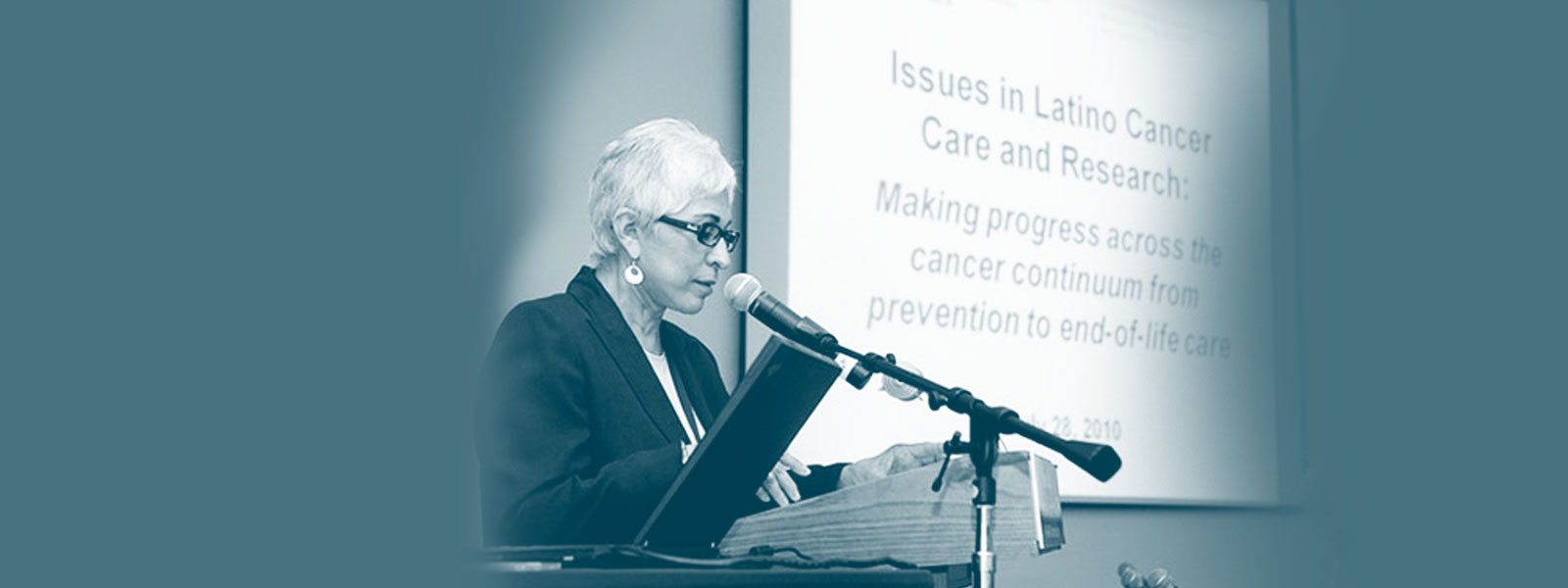
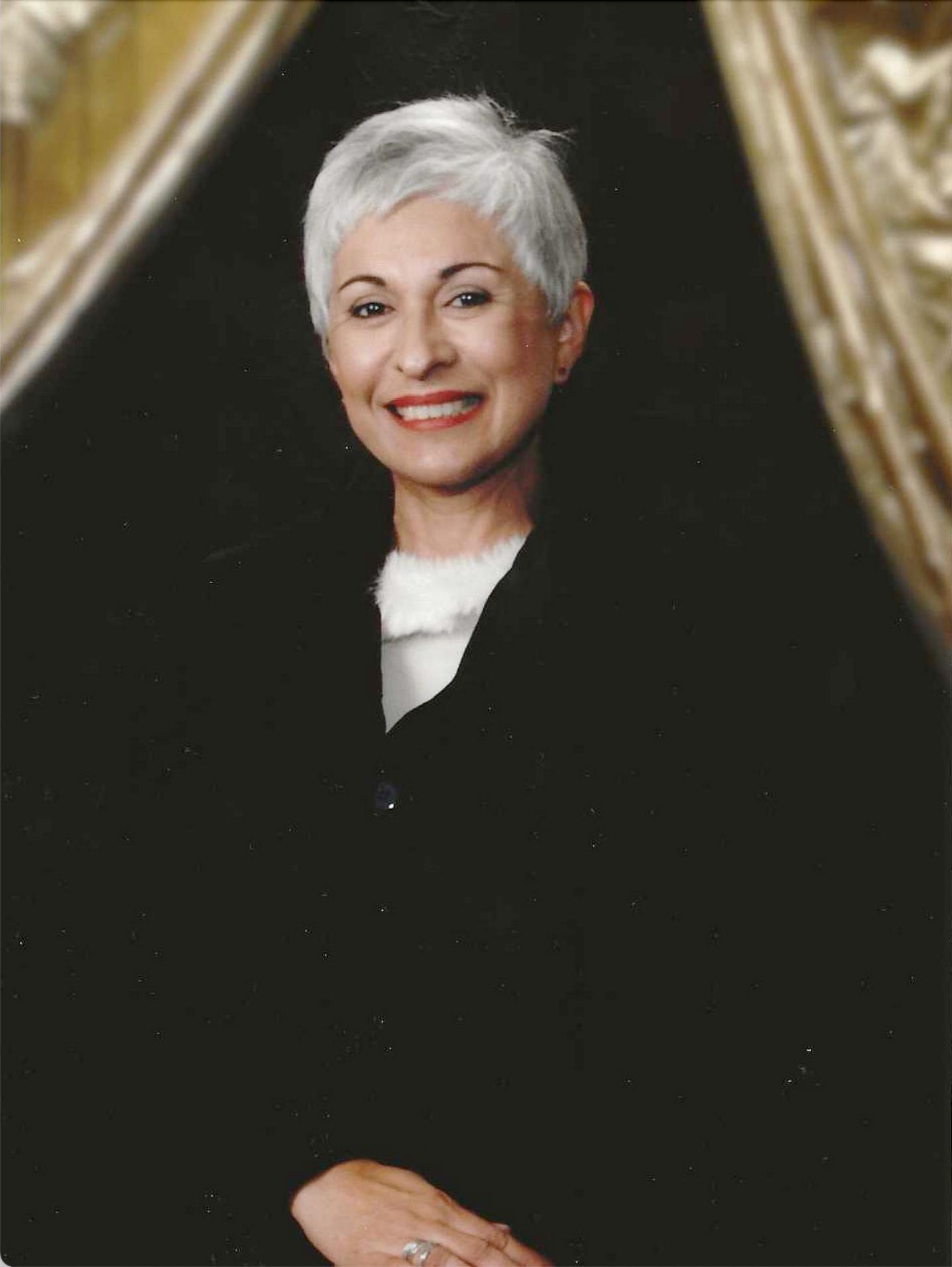
Ysabel Duron

Who We Are at The Latino Cancer Institute

FOUNDER/EXECUTIVE DIRECTOR

Ysabel Duron

Journalist, Cancer Survivor, Patient Advocate

FOUNDER/EXECUTIVE DIRECTOR
The Latino Cancer Institute
San Jose, CA

Ysabel Duron is a pioneering, award-winning Latina journalist, a cancer survivor, and for the past 25 years, a leading patient activist around Latino community engagement. Her encore career as a cancer patient advocate and non-profit agency builder commenced when she was diagnosed with cancer in 1999.

In February 2023, President Joe Biden appointed Duron to the National Cancer Advisory Board (NCAB), which advises the Director of the National Cancer Institute. She serves as one of the few patient advocates on the Board.

Duron describes her “work in and with community,” as a learning classroom and credits the experience with preparing her for her advocacy role. Among other things, her former agency developed programs for low income, Spanish-speaking and immigrant communities to address gaps along the cancer continuum including cancer awareness education, navigation into screening, psychosocial support groups and a lay community navigator program to support and guide low income, Spanish-speaking cancer patients in the public health care system in Santa Clara County (San Jose), California.

Between 2008 and 2016, under her leadership at Latinas Contra Cancer (LCC), Duron  convened 5 unique National Latino Cancer Summits, turning its lens on cancer issues in the Latino community, collaborating with advocacy groups, researchers and health care providers to investigate, and address cancer-related impacts.

LCC also created linguistically and culturally appropriate education tools using a bingo game model to dispel myth and misinformation, promote healthy eating and exercise as well as screening and early detection; training up to 200 promotores, aka community health workers, to use these tools to raise awareness and navigate eligible participants into screenings.  This bingo concept was adapted for the African American and Pacific Islander communities, and cited by the NIEHS – IBCERCC Committee, on which Duron served, in the 2012 Breast Cancer and the Environment, Prioritizing Prevention Report.

In 2017, Ms. Duron launched her third and current agency, The Latino Cancer Institute (TLCI), to amplify Latino voices about the cancer burden – acting as a force multiplier through a nationwide network of stakeholders; dedicated to promote the work of Latino community service agencies; to provide collaboration with the global cancer research community; and to drive policy to improve health outcomes and diminish disproportionate Latino cancer mortality.

The Institute has since convened 5 National TLCI Forums as Duron continues to bring together researchers, clinicians, advocates, government and industry officials across the cancer landscape. The 5th annual Forum, “The Turbulent Ecosystem: Climate Change’s Impact on the Latino Cancer Burden,” was held virtually on October 27, 2023.

TLCI’s collaborations include engagements with academic partners such as the Stanford Cancer Institute, Universities of California at San Francisco and Davis, Georgetown University Lombardi Comprehensive Cancer Center, George Washington Cancer Center, the California Primary Care Association (FQHCs), San Diego and San Jose State Universities. Duron is a published co-author in over 10 research papers, including a 2023 publication titled “Critical Reflections on This Historical Moment for Community-engaged and Participatory Research” in Progress in Community Health Partnerships: Research, Education, and Action.

TLCI’s robust engagement has resulted in two invitations to the White House, once for a re-launch (Feb 2022) of President Joe Biden’s Cancer Moonshot initiative to drive cancer screenings and decrease cancer mortality by 50% in 25 years. The 2nd White House event (Oct 2022) spotlighted the American Cancer Society launch of the newly formed National Breast Cancer Roundtable (NBCRT) on which Duron was invited to serve. NBCRT aims, among other policy initiatives, to address disparities in cancer screening and access, advanced diagnostics and quality treatment impacting racial and ethnic populations.

Duron also serves on the Institutional Review Board (IRB) of the All of Us Research Program at the National Institutes of Health; invited to join in 2016 by former NIH Director Francis Collins, as a patient advocate. 

Duron served as a member of the California Initiative to Advance Precision Medicine Advisory Council (CIAPM) until 2024, which advised the Governor on the direction of Precision Medicine issues in the state.

As a member of the Independent Citizen’s Oversight Committee (since 2019) of the California Institute for Regenerative Medicine (CIRM), a tax-payer funded stem cell research program, Duron successfully drove a motion that requires research proposals to include a plan on recruiting a proportionate number of racial and ethnic minorities into newly funded COVID Clinical Trials. The expansion of diversity, equity and inclusion (DEI) has since been incorporated into the majority of Requests for Proposals funded by the Institute and drives frameworks for internal organizational operations. CIRM CEO, Maria Millan, said that the “culture,” has changed amongst CIRM scientific reviewers who now more vigorously question the quality of the DEI plan in the research proposals, which are also scored by patient advocates and can be returned to applicants for improvements.  

As a member of the National Rapid Research Coalition, for the Johns Hopkins University Center for Health Security between 2020 and 2022, Duron advised on the community’s role in an equitable and effective Covid vaccination rollout (titled CommuniVax), supported the research site team in California (one of five sites around the country), consulted on and assisted in editing the three CommuniVax national reports.

Duron was also elected in 2021 to the University of California Center for Data Drive Insights and Innovation (UCCDI2) which engages in a collaborative approach with UC Health to build a pre-eminent data-driven learning healthcare system that improves the human condition.

In recent years, Duron has been invited to speak at numerous high-profile events. In 2023, she was the keynote speaker at the Latino Community Health Equity Conference in Southern Arizona, providing insights on cancer disparities affecting the Latino community. She also participated in a virtual conversation with The Hill’s Editor in Chief on “Geographic and Equity Roadblocks to Cancer Care.” In 2024, Duron joined a panel at SXSW discussing “Cancer Innovations and Those Who Are Left Behind,” moderated a panel at the Congressional Hispanic Caucus Institute’s 2024 Issues Summit, and participated in a panel on AI, privacy, and safety in healthcare at the Health Data Leadership Institute conference.

A broadcast journalist for 43 years, Duron was inducted into the National Association of Hispanic Journalists Hall of Fame in 2009. A 1970 graduate of San Jose State University with a B.A. in Journalism, Duron distinguished herself in both the journalism and non-profit worlds winning a number of prestigious awards. These include two Emmys, a Radio-TV News Director Award, the Girl Scouts Juliette Gordon Award for her Trouble with Teacher Series, the Silicon Valley NAACP Chapter W.E.B. Dubois Award, as well as the Living Legacy Award from the Chicana- Latina Foundation, the 2005 Bay Area Most Influential Latino from the SF Business Times, a Lifetime Achievement Award from the International Women’s Media Association, and the 2011 Latino Spirit Award from the Latino Caucus of the California Legislature.

Duron’s non-profit work garnered her the 150-thousand dollar Purpose Prize (2013) from ENCORE, and won her the Distinguished Public Service Award from the American Psychosocial Oncology Society among others. More recently, she was named one of MM&M’s 2024 Healthcare Influencers and honored as an Individual Honoree at the 2024 Latinx Business Leadership Awards by the Silicon Valley Business Journal.

In 2024, Duron produced and hosted a 6-part all virtual Friday Forum Series titled “Talking about cancer won’t kill us, the silence will!” This series underscores her ongoing commitment to breaking the silence around cancer in the Latino community and fostering open dialogue about prevention, treatment, and support.

Duron continues to be actively involved in high-profile cancer awareness and advocacy events. She joined FDA’s Oncology Center of Excellence (OCE) Conversation on Cancer public panel discussion, which kicked off National Hispanic Family Cancer Awareness Week on September 20, 2024. She also spoke at the Advancing Precision Medicine (APM) conference in November 2024, exemplifying her tireless commitment and indomitable spirit in advancing cancer research and patient advocacy.

For more information, email contactUs@latinocancerinstitute.org


TLCI Blog by Ysabel Duron, President/Executive Director

16 Jul, 2025

Who Gets Life-Saving Tumor Tests—and Who Doesn’t?

New research Stanford University in collaboration with The Latino Cancer Institute uncovers barriers to breast cancer care in Latino and other marginalized communities.

A message from Ysabel Duron, Founder & CEO, The Latino Cancer Institute

Two years ago, The Latino Cancer Institute joined Stanford University as a co-investigator to uncover what’s really happening in breast cancer care for Latinas in our communities. Now, we have findings that confirm what many of us have long suspected: low-income, Spanish-speaking, and other vulnerable women face significant barriers to life-saving tumor testing.

What We Found Changes Everything

Working with five Bay Area community agencies, we recruited participants directly from our communities, held two public town halls, and convened expert meetings. The result? A clear and unsettling picture: some women have access to critical tumor testing—and others do not.

This testing shouldn’t be optional. It identifies how cancer cells behave and helps guide treatment. Without it, women may not receive the therapies that give them the best shot at survival. This is not just a gap in access—it’s a matter of life and death. It should be a standard of care!

(Click/Tap on the image to download the Infographics for Advancing Breast Cancer Tumor Testing.)

Why This Work Matters

As someone who’s spent decades advocating for Latino cancer patients, I know that research without community engagement often misses the mark. That’s why this partnership with Stanford was different. We didn’t just observe our communities—we brought their voices into the research.

The community agencies ensured we reached the women whose stories needed to be heard. Our town halls allowed space for honest dialogue. And our expert meetings helped interpret the findings with both scientific rigor and cultural insight.

The Power of Partnership

This is the kind of work TLCI champions: science grounded in community. When academic institutions partner authentically with trusted community organizations, we move beyond documenting disparities—we uncover root causes and identify solutions.

And at a time when federal funding for health equity research is under threat, these partnerships matter more than ever. They show that community-led research isn’t just possible—it’s essential.

What Comes Next

Funded by the California Breast Cancer Research Program, a taxpayer supported state agency, Stanford’s research team, led by Manali I. Patel, MD MPH MS, has developed infographics in English and Spanish to make our findings accessible to the very communities that made this research possible. Because these findings belong to them.

The results are troubling—but they’re also a call to action. When we face the truth, we can demand better. TLCI is here to turn data into advocacy and advocacy into impact.

Thank you to Stanford, our community partners, and especially the women who shared their stories. Your voices are changing how breast cancer is understood—and how it’s treated.


Learn more and get involved:
• Follow us @thelatinocancerinstitute on Facebook, Instagram, LinkedIn and Threads
Register for our free, virtual Latino Men’s Health Forum Series
Support our research and advocacy

When federal research fails our communities, we step up.


Explore More: Latina Breast Cancer & Health Equity

Want to learn more? These videos, newsletters, and articles expand on the realities—and solutions—surrounding breast cancer in Latino communities.

19 May, 2025

Standing with President Biden and Latino Cancer Patients

A personal message from our Founder

Dear TLCI Community,

A Personal Connection to the Cancer Moonshot

I write today saddened to hear that former President Joe Biden has been diagnosed with prostate cancer. This news resonates deeply with me, both as someone who has spent decades fighting cancer and as a person who was honored to be appointed by President Biden to the National Cancer Advisory Board (NCAB) at the NCI as a patient advocate.

In 2022, I stood in the White House as President Biden relaunched the Cancer Moonshot initiative with an ambitious goal: reducing cancer mortality by 50% over the next 25 years. The energy and hope in that room were palpable. Here was a leader who understood the urgency of cancer research not just as a policy priority, but as a deeply personal mission. He’d lost a son to brain cancer!

A year later, when President Biden appointed me to the National Cancer Advisory Board, I felt the weight of responsibility to ensure that Latino voices were represented in our national fight against cancer. That appointment wasn’t just an honor for me—it was recognition that the fight against cancer must include all communities.

Our 2025 Focus on Latino Men’s Health

It feels particularly poignant that TLCI’s 2025 virtual Forum series will focus on prostate cancer and other cancers affecting Latino men. This was planned months ago, yet now takes on added significance. Like many health disparities, prostate cancer disproportionately impacts communities of color, often diagnosed later with more advanced disease.

As a community, we understand what the Biden family is experiencing. Many of us have sat with loved ones during cancer diagnoses, treatments, and in too many cases, loss. President Biden himself has experienced the pain of losing a beloved son to cancer, which fueled his passion for the Cancer Moonshot initiative.

A Critical Moment for Cancer Research

I must express my deep concern about the current administration’s approach to cancer research funding. Many vital cancer research projects at the NCI have seen significant cuts, threatening to set back years of progress in early intervention, diagnostic testing, and advanced treatments. These steps jeopardize every advancement we’ve made in equity care, academic-community research collaboration, and efforts to increase Latino representation in clinical trials.

At TLCI, we’re witnessing firsthand how these funding decisions affect real people in our communities. Cancer doesn’t care about politics—and neither should our commitment to fighting it.

Moving Forward with Determination

Despite these challenges, TLCI remains more committed than ever to our mission. Our upcoming forum series will bring together researchers, clinicians, patients, community agencies and advocates to address the specific cancer burdens facing Latino men, impacting their health and economic vitality.

SAVE THE DATES

TLCI 2025 Virtual Forum Series: Latino Men’s Cancer Health

Session 1: Sept 12, 2025, 9:00AM -12:00PM PTSession 2: Oct 3rd, 2025, 9:00AM -12:00PM PTSession 3: October 24th, 2025, 9:00AM -12:00PM PT
Prostate and Liver Cancer in Latino Men  Machismo – A health barrier or a Coping Mechanism  Health is Wealth – Latinos as an economic engine of the U.S. economy

Registration opens June 2nd, 2025. Want to stay informed about the Forum and other TLCI events? Sign up for our newsletter to get updates straight to your inbox.

Join us as we address these critical health issues affecting our community and learn from leading experts in the field. All sessions will be presented in both English and Spanish.

We are honored to have remarkable leaders in our network, including Dr. Laura Fejerman (UC Davis), Dr. Manali Patel (Stanford), Dr. Enrique Velazquez Villarreal (City of Hope), Dr. Mariana Stern (Keck School of Medicine at USC), Dr. Noah Merin (Cedars-Sinai Medical Center), Dr. David Garcia (University of Arizona), and Dr. Eliseo Perez-Stable. Their groundbreaking work continues to advance our understanding of cancer in Latino communities, representing the kind of innovative, community-centered approaches that can help us overcome disparities in cancer outcomes.

The Institute’s thoughts and prayers are with President Biden and his family during this difficult time. I’m grateful for his years of advocacy and support for cancer research. His personal courage in facing this diagnosis reflects the same determination he brought to the Cancer Moonshot initiative.

As we move forward, let us recommit ourselves to ensuring that all communities—regardless of race, ethnicity, geography, or economic status—have access to the latest cancer prevention, detection, and treatment options. Together, we can continue the important work of the Cancer Moonshot and honor its vision of reducing the cancer burden for all Americans.

Ysabel Duron

Founder, Executive Director

The Latino Cancer Institute


21 Apr, 2025

Latina Breast Cancer, Culture, and the Call to Action

When the De Los team recently published its critical piece on Latina breast cancer, it did more than shine a light—it amplified voices too often left out of national conversations. For too many Latinas, a breast cancer diagnosis comes late, with fewer options and deeper burdens. These stories matter. Because when we listen closely, they show us where systems fall short—and how we can rise to meet the moment.
At The Latino Cancer Institute (TLCI), this is exactly the work we do: raising awareness and pushing for action.

Our October 2024 Friday Forum Series spotlighted disparities in breast cancer outcomes and heard directly from leaders and advocates who know how deep the gaps run. Dr. Eliseo Pérez-Stable summed it up clearly:

Not having insurance or having Medicaid increases the odds for Latinas to be diagnosed with stage 3 cancer.”

We also looked at the persistent underuse of genomic (tumor) testing—decades after it became a proven tool. Why aren’t more Latina patients benefiting from it? At our recent Townhall, Dr. Manali Patel and I explored the barriers, including how disparities persist even when caregivers want to do right by patients.

We also heard a powerful call from Dr. Elizabeth Jaffee to professionalize community health work:

This should be a profession where people get paid and trained.”

That vision is already coming to life through Dr. Barbara Segarra-Vázquez’s Latino Cancer Patient Advocacy Training Program, which has prepared 15 Latino advocates to take seats at the table in national cancer networks.

We’ll continue this work—and grow it.

In the months ahead, TLCI will participate in national events like the ACS NBCRT Virtual Expo with Engagement Day on May 8, 2025, and host a new series of Male Health Forums focused on cancer prevention and education in Latino communities. These forums, scheduled for September 12, October 3, and October 24, will dig into the theme: “Latino Male Health – Cancer, An Unaddressed Burden.”

We also recently attended SXSW 2025, where I joined the panel “The Big C in Cancer Care: Culture” hosted by Real Chemistry. It was a timely and necessary conversation. Culture shapes how women experience cancer care, from screening and diagnosis to treatment and survivorship. If health systems ignore this, women suffer disproportionately. It’s time to change that.

The Big C in Cancer Care: Culture

So thank you—to journalist Alex Zaragoza who took the time to cover this issue in her article The scary but lifesaving truth about Latinas and breast cancer,” to the researchers digging into disparities, and to every advocate helping to shift outcomes for our families. TLCI is proud to be part of this growing movement.

We invite our community to read and share the article. The more informed we are, the more empowered we can be in our health choices and our advocacy.

If you haven’t yet, we invite you to sign up for our newsletter and join a community of researchers, advocates, and changemakers. We’re just getting started.

Let’s continue the conversation!

Support.

Help us help others

As a nonprofit organization, we rely on philanthropy and grants in our mission to support other agencies. Your funding allows us to continue the development of new programs and tools we can share with those making a difference in the lives of Latino cancer patients, survivors, and their caregivers.

Join our cause.
Únete a nuestra causa.